
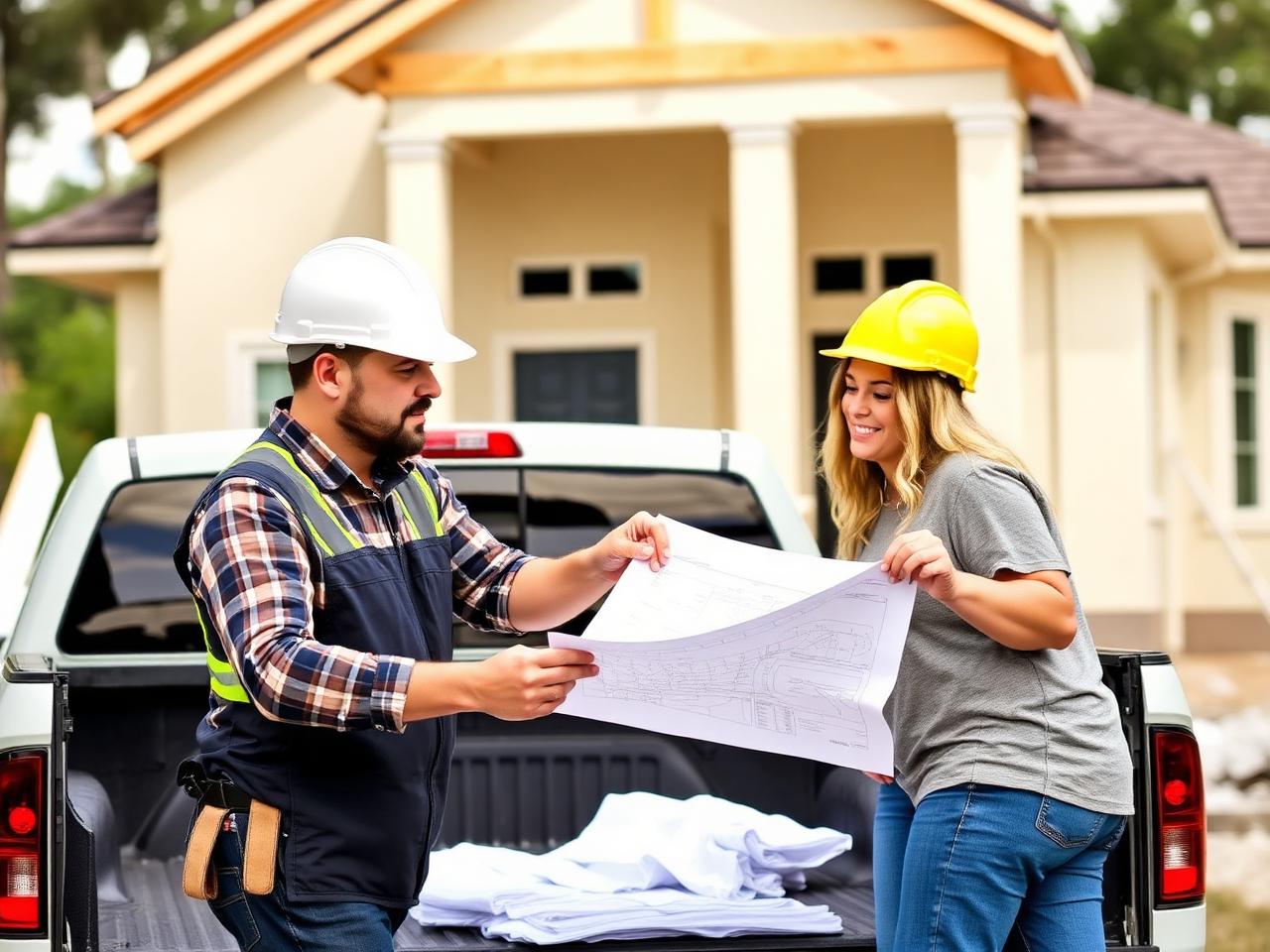
Seven steps from idea to finished home
A construction loan is underwritten against a house that does not exist yet, so the process includes a few stages a standard purchase does not. The order below reflects how Florida projects typically run. Timelines vary widely by county, largely because permitting does. If you already hold the lot, much of this sequence still applies to building on land you already own, though the land-acquisition step is replaced by confirming the lot is ready to build on. For a broader overview of how these loans are structured, see how construction loans work in Florida.
- 1
Prequalification and program review
We review your credit, income, assets and the project itself — where you are building, whether you own the land, and roughly what it will cost. The output is a realistic picture of which programs fit and what your contribution is likely to be, before you commit to a builder or a lot.
- 2
Select your builder
Before moving forward with the construction loan, you will need to determine which builder you plan to work with for your project. Your builder is an important part of the construction financing process because the lender will need information about both the builder and the proposed construction. Once you have selected your builder, we can begin gathering the documentation required for the loan program — depending on the lender and program, this may include the construction contract, plans and specifications, a detailed construction budget, the project timeline, builder licensing and insurance information, and other builder documentation. Builder requirements vary by lender and loan program, so we can help you understand what will be needed for your specific financing option.
- 3
Plans, specifications and budget
Complete plans, a written specification list and a line-item construction budget are assembled with the builder, along with a signed construction contract. Site work — clearing, fill, driveway, utilities, well and septic — belongs in this budget, not outside it.
- 4
Full application and underwriting
The complete file goes to underwriting: your financials plus the project package. Underwriting evaluates both the borrower and the build, which is why construction files ask for more documentation than a purchase of an existing home.
- 5
As-completed appraisal
An appraiser values the home as if it were already finished, working from the plans, specifications and budget. This as-completed value is a central input to the transaction. Florida permitting timelines and the appraisal are usually the two items that determine the overall schedule.
- 6
Closing and construction start
The loan closes, land is acquired or the existing lot loan is addressed, and the builder can begin. On a one-time close structure this is the only closing you attend. Permits must be in place before construction begins.
- 7
Draws, inspections and completion
Funds are released in draws as verified work is completed, with an inspection before each disbursement. Payments during construction are typically interest-only on the amount drawn. At completion — certificate of occupancy, final inspection, final appraisal — the financing moves into its permanent phase or is paid off by a separate permanent mortgage.
How draws actually work
Draws are the part borrowers ask about most. Rather than handing over the full loan amount at closing, the lender disburses funds in stages tied to completed work — for example after the foundation, framing, dry-in, mechanicals, drywall and finish stages. Before each disbursement, an inspection confirms the work is genuinely in place.
This protects everyone: the lender is never advanced past the value on the ground, and you are not paying interest on money that has not been spent. During construction, payments are typically interest-only on the drawn balance, which is why the payment climbs gradually as the home takes shape.
Change orders
Almost every custom build has some. A change order can affect the budget, the schedule and occasionally the appraisal, so changes need to be documented and reviewed rather than handled informally with the builder. Agreeing on how changes will be processed before construction starts prevents most of the friction.
What tends to cause delays in Florida
- Permitting timelines and impact fee schedules, which vary substantially from county to county
- Incomplete plans or budgets submitted to underwriting
- Site conditions discovered after clearing begins, including well, septic and drainage design on rural parcels
- Weather, particularly during hurricane season
- Material and subcontractor availability
- Builder documentation that arrives piecemeal
- Obtaining insurance quotes for coastal or windstorm-exposed properties
The single most effective thing a borrower can do is submit a complete package the first time — full plans, a real line-item budget and a signed contract.
Florida-specific factors also shape the schedule and the loan file itself. A flood zone determination can add elevation requirements and flood insurance costs that affect both the budget and how the file is underwritten. Windstorm and homeowners insurance availability and cost, especially near the coast, can influence qualifying ratios, so it helps to get quotes early. Coastal construction may involve additional engineering and permitting review beyond what an inland lot requires. County permitting timelines and impact fees, whether the property will rely on well and septic or municipal utilities, a current survey, and the sequence of construction inspections tied to draws are all practical items that affect financing timing and documentation, not just construction itself.
What happens at completion
Once the home receives its certificate of occupancy and passes final inspection, a final appraisal or inspection confirms the completed property. On a one-time close structure, the loan converts to its permanent term automatically — no second closing. On a two-close structure, you close the permanent mortgage separately, which pays off the construction loan.
Before you start
Reviewing the Florida construction loan requirements will tell you what documentation to gather. When you are ready, contact The Built Mortgage Team.