
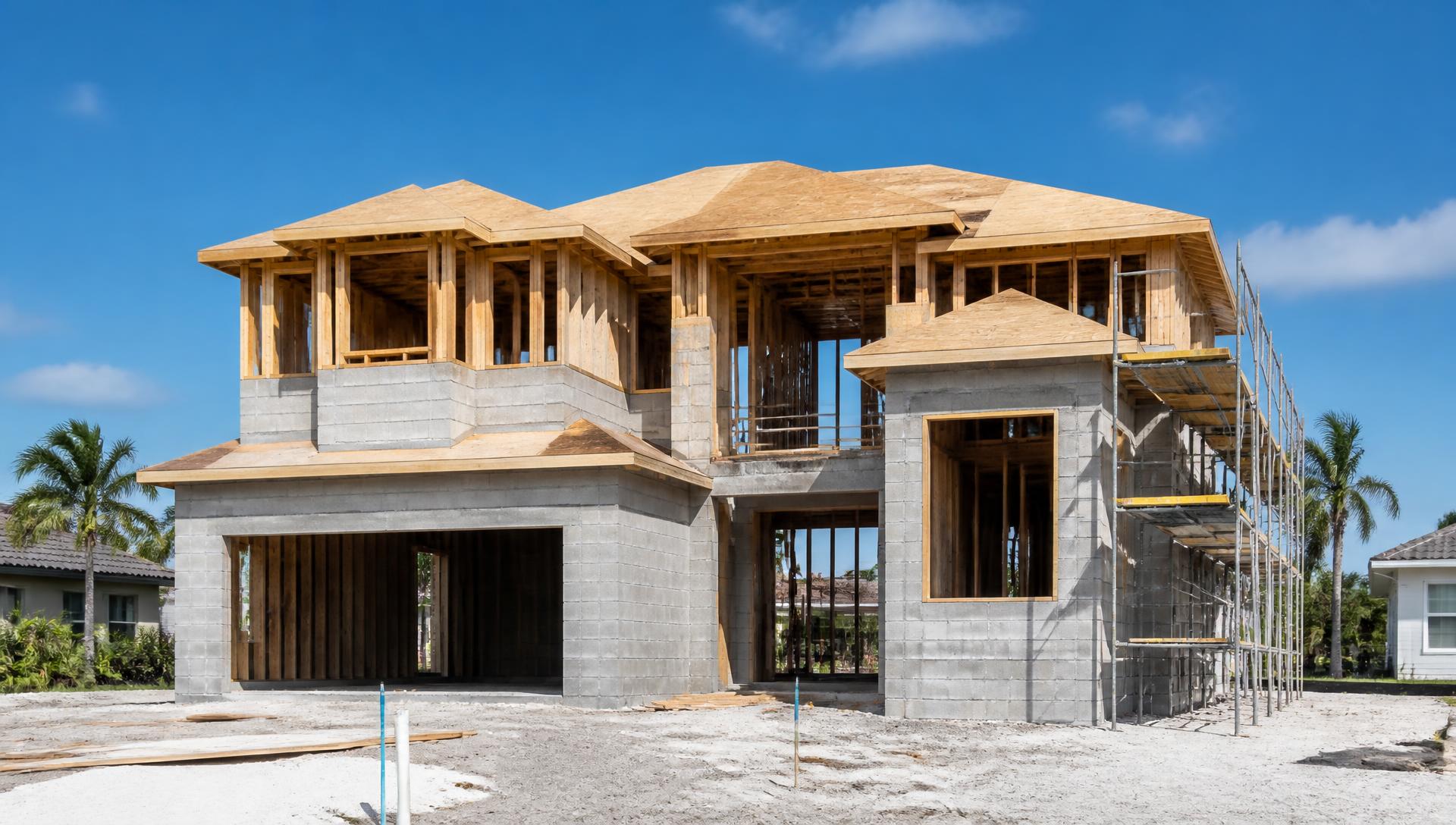
In short: a construction loan pays your builder in draws tied to progress on the home, using a budget the lender reviewed up front and an as-completed appraisal that estimates what the finished house will be worth. Instead of one disbursement at closing, funds are released as milestones are inspected and confirmed, and interest during the build is generally charged only on money that has actually gone out the door.
Once the home is finished and passes its final inspection, the loan either converts directly into a permanent mortgage — if it was structured as a one-time close loan — or it is paid off through a separate refinance into permanent financing under a two-close structure. Everything in between, from the paperwork your builder provides to how Florida's flood zones and permitting timelines factor in, shapes how smoothly that path runs.
What makes a construction loan different from a purchase mortgage
A purchase mortgage lends against a house that already exists — the collateral is visible, inspected and appraised as-is. A construction loan lends against a house that doesn't exist yet. The lender is underwriting a plan: your credit and finances, a licensed builder's qualifications, a set of plans and specifications, and a budget that has to add up to a home worth at least what it costs to build. Because the collateral is a work in progress, the lender controls disbursements closely and verifies progress before releasing each round of funds, rather than handing over the full loan amount on day one.
One-time close vs. two-close construction loans
Florida borrowers generally choose between two structures. A one-time close loan combines the construction financing and the permanent mortgage into a single closing and a single set of loan documents; the loan automatically converts to permanent terms once the home is complete, which means no second approval, no second set of closing costs, and no exposure to rate or qualification changes in between. A two-close structure closes the construction loan separately, then requires a full refinance into a new permanent mortgage after the home is done — effectively two closings, two sets of costs, and a second underwriting. Which one fits depends on the builder, the lender, and the loan program; availability varies.
The as-completed appraisal
Because there's no finished house to inspect yet, the appraiser values the home based on the plans, specifications and lot, projecting what it will be worth once built — this is the as-completed or proposed-construction appraisal. It anchors the whole loan: the lender compares total project cost (land plus construction) against this projected value, and that relationship helps determine how much can be financed. An appraisal that comes in lower than the budget can mean adjusting the plans, the budget, or the cash brought to the table.
The construction budget and cost breakdown
Before closing, your builder typically provides a detailed cost breakdown — site work, foundation, framing, mechanical systems, finishes, permits, and a contingency line — that the lender reviews alongside the plans. This budget becomes the basis for the draw schedule. Every dollar disbursed during construction is measured against it, which is part of why a realistic, complete budget matters more here than in almost any other type of home financing.
The draw schedule and inspections
Funds are released in draws, generally tied to completed stages of work such as foundation, framing, dry-in, mechanical rough-in, and final finishes. Before each draw is paid, an inspection (sometimes by a third-party inspector, sometimes by the lender's own process) confirms the work claimed has actually been completed to that point. This protects both the lender and you, since it keeps the builder from being paid ahead of progress and keeps the project on a documented trail from groundbreaking to move-in.
Interest during construction
Many construction loans charge interest only on the portion of funds that has actually been disbursed, rather than on the full committed loan amount from day one. As more of the budget is drawn down over the course of the build, the interest-only payment typically rises along with it. How interest is calculated, billed and — under a one-time close structure — rolled into the permanent payment varies by lender and program, so it's worth confirming the specific mechanics for your loan before you close.
Builder review and documentation
Lenders generally require your builder to be licensed, insured, and vetted through a builder approval process before the loan can close. Expect to provide (or have your builder provide) a builder's license and insurance certificates, a construction contract, detailed plans and specifications, and the cost breakdown mentioned above. See construction loan requirements for the fuller borrower and builder documentation list.
Contingency and change orders
Most budgets include a contingency line to absorb the unexpected — a permitting delay, a pricing change on materials, or a site condition discovered once excavation begins. Change orders (formal amendments to the scope or cost of the project) generally have to be documented and, depending on their size, may need lender approval before the loan can accommodate them. Building in a contingency up front is one of the more effective ways to avoid a mid-project funding gap.
Florida-specific factors that affect the budget and the file
Flood zone and elevation
A parcel's flood zone designation can drive foundation type, minimum elevation requirements, and insurance cost — all of which belong in the budget from the start rather than surfacing as a surprise mid-build.
Windstorm and hurricane insurance availability
Coastal and high-wind areas of Florida can see tighter windstorm insurance markets and higher premiums. Insurance availability and cost are part of what a lender reviews, since they affect both the budget and the long-term affordability of the finished home.
Coastal construction considerations
Homes near the coast may need to meet additional wind-load and construction standards, which can add cost to framing, roofing and window/door systems. These requirements are set by local building codes and are best confirmed with your builder and local building department.
Permitting timelines by county
Permitting pace varies a great deal from one Florida county or municipality to the next. A build in a fast-moving inland county can break ground much sooner than a similar project in a coastal jurisdiction with a heavier review process. See Florida service areas for a sense of regional differences we commonly see.
Impact fees
Many Florida counties charge impact fees tied to new construction, covering things like roads, schools and utilities. These fees vary by jurisdiction and project type and should be built into the budget alongside permit fees.
Well and septic vs. municipal utilities
Rural and semi-rural Florida lots often require a private well and septic system rather than connecting to municipal water and sewer, which is a real cost line, not an afterthought. Confirming utility availability early helps the budget and the appraisal line up.
Surveys and site work
A current survey and adequate site work — clearing, grading, drainage and driveway construction — are foundational to both the build and the appraisal. Underbudgeting site work is one of the more common reasons a Florida project runs short of funds partway through.
What happens at completion and conversion to permanent financing
Once the builder finishes, the home passes its final inspection, and a certificate of occupancy is issued, the construction phase wraps up. Under a one-time close loan, the loan converts to its permanent terms without a second closing. Under a two-close structure, you refinance into a new permanent mortgage, which involves fresh underwriting, a new appraisal or confirmation of value, and a second set of closing costs. Either way, this is the point where your payment shifts from interest-only on disbursed funds to a standard principal-and-interest payment on the full loan amount.
Timeline expectations
Every Florida build runs on its own clock, but a few ranges are useful for planning purposes. Loan approval and closing often take a matter of weeks depending on how complete your documentation and builder file are. Permitting can range from fairly quick in some counties to considerably longer in others. Construction itself commonly spans several months to a year or more depending on the size and complexity of the home, the builder's schedule, and weather. These are general patterns, not guarantees — your builder and lender can give you a more specific estimate once your plans, lot and county are known.
Common questions
How is a construction loan different from a regular mortgage?
A regular mortgage funds in a single lump sum at closing because the property already exists. A construction loan funds in stages, called draws, as the home is actually built, because there is nothing to lend against yet except a set of plans, a budget and a lot. The lender is financing a project in progress rather than a finished asset.
What is an as-completed appraisal?
It's an appraisal that estimates the value of the home as if it were already built, based on the plans, specifications and construction budget rather than the property's current condition. That projected value, not the raw land value alone, is what construction financing is measured against.
How many draws are there during a Florida build?
It varies by lender, loan program, and the size and complexity of the project. Some structures use a handful of draws tied to major milestones like foundation, framing, dry-in, and finish work; others use more granular schedules. Your builder's draw schedule and the lender's requirements are reconciled before closing.
Do I make full mortgage payments during construction?
Many construction loans charge interest only on the funds actually disbursed during the build, which keeps payments lower while the home isn't yet livable. Exact terms depend on the loan program and lender, so confirm how interest is calculated and billed before you close.
What happens when the house is finished?
Once construction is complete and the final inspection and certificate of occupancy are in hand, a one-time close loan typically converts automatically into permanent financing. A two-close structure requires a separate refinance into a permanent mortgage at that point, subject to a new underwriting and closing.
Does flood zone or hurricane exposure affect the loan?
It can affect the budget and the file. Elevation requirements, wind-mitigation features and the cost and availability of windstorm and flood insurance all feed into the total project cost and the underwriting, particularly for coastal and low-lying Florida parcels.
How long does the whole process take from application to move-in?
Timelines vary widely based on the lender, the county's permitting pace, the builder's schedule, and the complexity of the home. Approval and closing can often take several weeks, and construction itself commonly runs a number of months, so it's best to think in ranges rather than a fixed date until permits are in hand.
Next steps
If you're weighing whether to build in Florida, a good starting point is understanding which loan program fits your situation — take a look at conventional and VA construction loan options, or, if you already own your lot, see how that changes things on building on land you already own.