
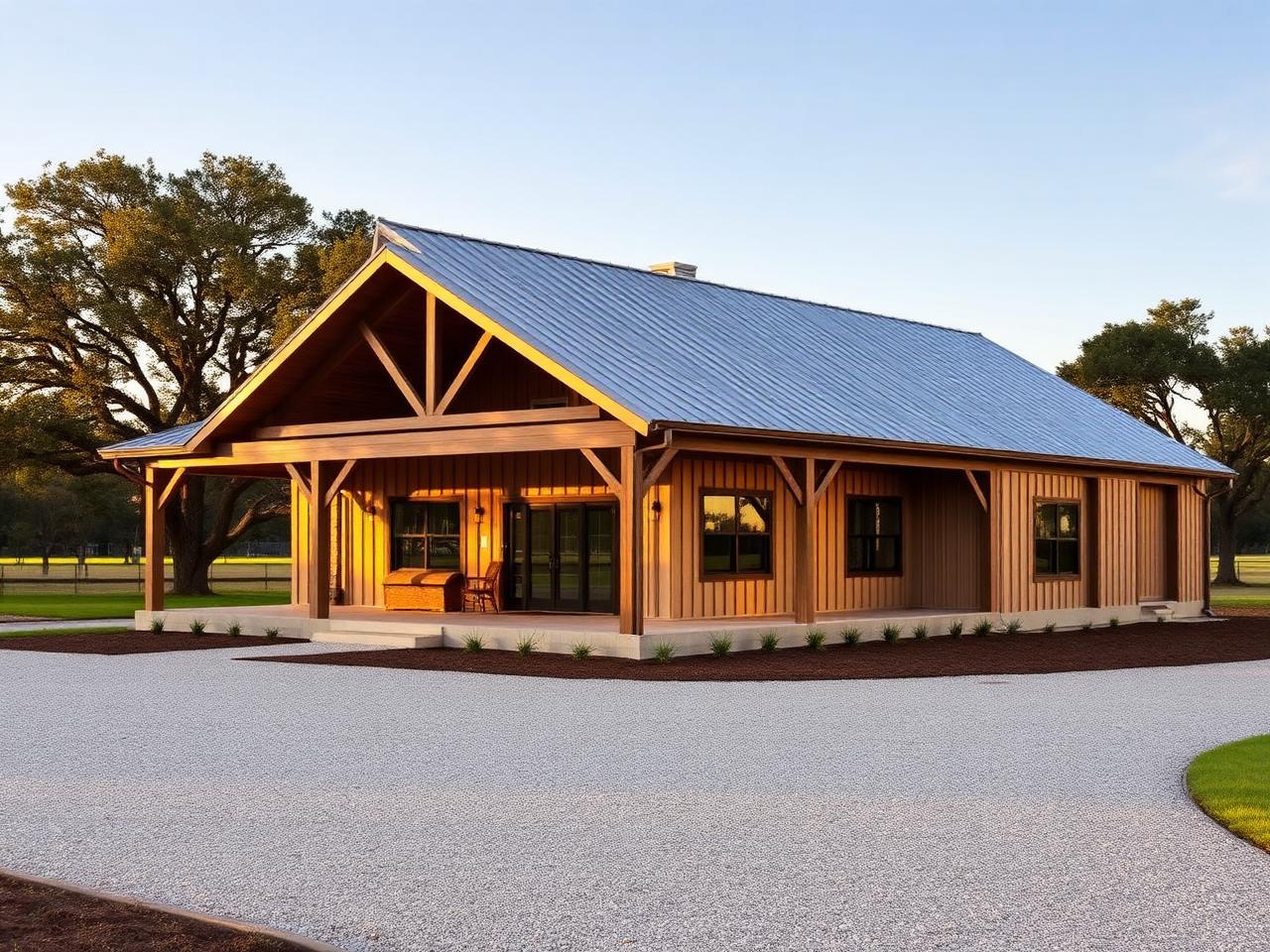
What makes barndominium financing different?
A barndominium is a residence built using post-frame or metal-frame construction rather than conventional stick framing on a traditional foundation footprint. From a financing standpoint, that difference is not automatically a disqualifier — but it does change what underwriting and appraisal generally have to establish. Financing eligibility can depend on the construction method, the appraisal, the plans and specifications, the builder, the characteristics of the property and the specific program's guidelines, which are subject to change.
The five questions that typically decide the outcome
1. Will it be classified as a single-family residence?
The completed property generally needs to read as a permanent residential dwelling — not an agricultural or commercial building with living quarters attached. Zoning, permitting and how the structure is described in the plans all feed into this.
2. Will the appraisal support the project?
This is often where barndominium projects succeed or stall. The appraiser needs comparable sales that support the as-completed value. In parts of Florida where barndominiums have become more common, that may be achievable. In markets where few or none have sold, the as-completed value can land below construction cost, and the borrower is generally responsible for covering that gap.
3. Is the construction method acceptable to the program?
Post-frame and steel-framed residences are treated differently across programs and lenders. Foundation type, wall assembly, insulation, roof structure and how the interior is finished can all matter. A permanent foundation and residential-grade finishes tend to make the conversation easier, but requirements vary by lender.
4. Is the builder qualified for this kind of build?
Lenders generally want a licensed, insured builder with documented experience in this construction method specifically — not just general residential experience. A signed contract and a detailed line-item budget are typically required as part of the builder documentation.
5. Does the parcel work?
Zoning, acreage, access, utilities or well and septic, flood zone and any deed restrictions can all affect feasibility. Rural Florida acreage often involves significant site work, which needs to be reflected in the budget.
Florida-specific considerations
- Wind loads and insurability. The completed structure generally needs to be insurable. Metal construction can perform well, but the design needs to meet applicable building code requirements, and windstorm coverage needs to be available and budgeted for.
- Rural site work and utilities. Well, septic, driveway, clearing and utility runs are often larger line items than buyers expect on acreage, particularly where municipal water and sewer are not available.
- Agricultural zoning. Parcels classified for agricultural use can carry different requirements for a residential structure, and county permitting timelines can vary accordingly.
- Comparable sales. Availability varies enormously between, say, north central Florida and a coastal county, and can affect how the as-completed appraisal is supported.
- Surveys and inspections. A current survey and periodic construction inspections are generally part of the draw and permitting process on acreage builds.
How to give your project the best chance
- Have the financing conversation before signing a build contract or ordering a kit
- Choose a builder with documented barndominium experience
- Specify residential-grade finishes, systems and a permanent foundation
- Get a complete, itemized budget that includes all site work
- Ask early whether comparable sales exist in your county
Common questions
Can you finance a barndominium in Florida?
Barndominium financing may be possible, but it is generally evaluated more carefully than a conventional site-built home. The main questions are whether the finished structure will be classified and appraised as residential real estate, whether comparable sales exist to support the value, whether the construction method and materials meet the applicable program's requirements, and whether the parcel's zoning permits it. Availability depends on the specific program and lender guidelines and is not guaranteed.
Why is a barndominium harder to appraise?
Appraisers rely on comparable sales of similar properties. In markets where few barndominiums have sold, supporting the value of a new one takes more work and may produce a lower as-completed value than the cost to build. That gap matters because financing is typically measured against the appraised value, not the budget.
Does a barndominium have to look like a barn?
No. The term covers a wide range, from a metal shell with a finished interior to a fully residential home with post-frame or steel construction and conventional finishes. Generally speaking, the more the completed property presents and functions as a permanent single-family residence, the more straightforward the financing conversation tends to be.
Can I use a VA loan for a barndominium in Florida?
VA financing is intended for a primary residence that meets applicable property requirements once complete. Whether a specific barndominium project qualifies depends on the construction method, the appraisal, the builder and program guidelines, which are subject to change. It is not automatically excluded and not automatically eligible — the project generally has to be reviewed individually.
Related financing paths
Many barndominium projects are reviewed under conventional construction loan programs, subject to lender and program guidelines. If you already hold the acreage, see construction financing for owned land. To understand what documentation you may need, read the Florida construction loan requirements, for the general sequence of events see the construction loan process, and for a deeper look at barndominium-specific financing see our barndominium financing guide and our broader overview of how construction loans work in Florida.